
Converting a basement into a “legal” suite is vastly different from a standard renovation. It requires strict adherence to the Ontario Building Code (OBC) and local municipal bylaws. With over 30 years of experience, we manage the entire “Legalization” process from initial drawings to final occupancy permits.
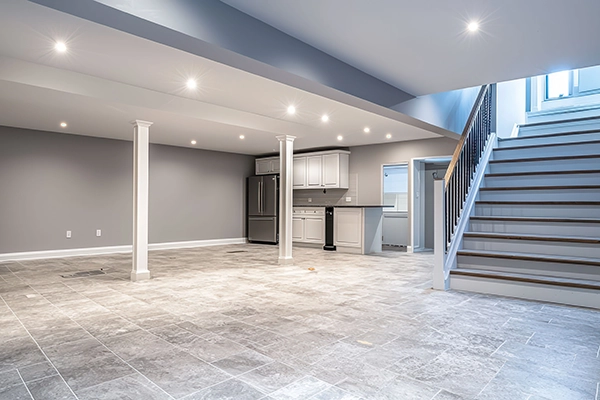
Our Legal Basement Services
- Permit & Design Management: We handle the submission of architectural drawings and secure the necessary building, electrical (ESA), and plumbing permits.
- Fire Separation & Safety: Installation of fire-rated drywall (Type X), fire-rated doors, and interconnected smoke/CO alarms to meet life-safety codes.
- Egress Windows & Exits: Cutting and installing code-compliant egress windows to ensure safe exit routes and natural light.
- Soundproofing: Utilizing resilient channels and acoustic insulation to ensure privacy between the upper and lower units.
- Independent Utilities: Setting up separate heating/HVAC controls and, where possible, independent electrical panels.

Why Make it Legal?
- Safety: Protect your family and tenants with proper fire exits and air quality.
- Insurance: Unregistered suites can void your homeowner’s insurance policy in the event of a claim.
- Resale Value: A registered second suite is a massive selling point and adds significantly more appraised value than an “in-law” suite.
- Peace of Mind: Avoid fines or “work-stop” orders from the city that can cost thousands to rectify.
FAQs: Legal Basements
The Legalization Process
What makes a basement "Legal" in Ontario?
A basement is considered legal only if it has been registered with the municipality and meets specific criteria: minimum ceiling heights, fire-rated separations between units, proper egress (exit) windows, and independent ventilation. Szentivany & Sons ensures every one of these boxes is checked.
Do I really need a permit for a basement apartment?
How tall do my basement ceilings need to be?
Cost & Timeline
How much does it cost to build a legal basement suite?
How long does the permit process take?
Technical Requirements
Is a separate entrance mandatory?
Do I need separate heating and cooling for the basement?
The building code requires that a secondary suite has its own way of controlling the temperature or that the ductwork is designed to prevent the spread of smoke between units (using fire dampers). We will guide you on the most cost-effective way to meet this requirement.